Did you know that more than 3000 Singaporeans experience cardiac arrests every year, and that most of these cases happen outside a hospital? In fact, this number is expected to double by 2030.
Cardiac arrest occurs when a person’s heart suddenly stops working properly. When the heart can no longer pump blood around the body, it leaves vital organs like the brain deprived of oxygen.
Without immediate emergency response, brain damage and organ failure can set in within minutes. Quickly restoring a normal heart rhythm gives the casualty higher chances of survival and recovery.
That’s what makes early intervention with an AED (Automated External Defibrillator) so important in cases of cardiac arrest. In Singapore, AEDs can be easily found in public places to help the public take action and assist victims of cardiac arrest before paramedics arrive.
However, many Singaporeans may not know where to find an AED or how to use it properly, because they lack confidence or training.
This article will explain how an AED works, guide you on how to use it in an emergency, and share how first aid training in Singapore can help you make a difference in a critical situation.
What Is an AED and How Does It Work?
An AED is a lightweight and portable medical device used to treat someone who is experiencing cardiac arrest.
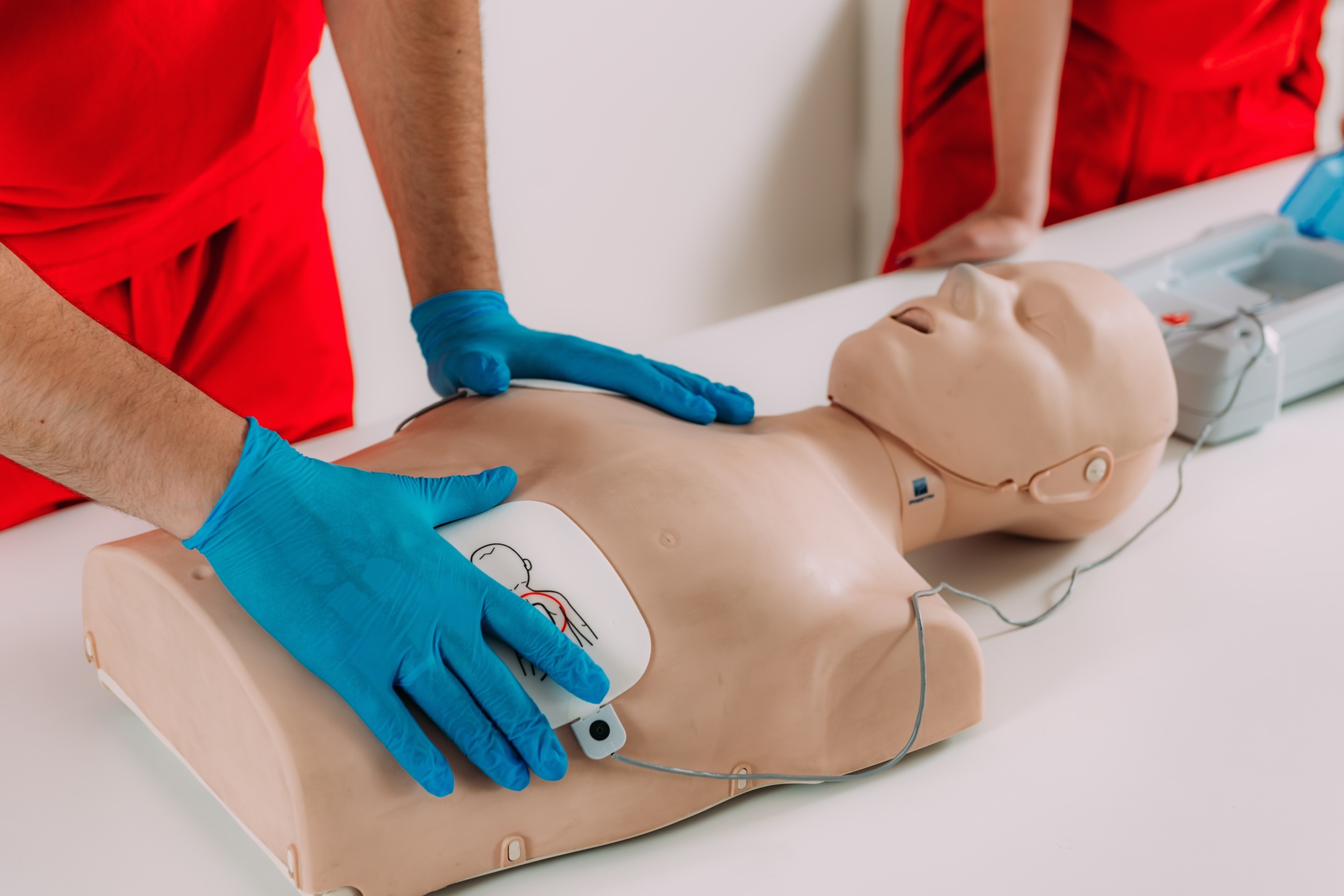
The AED comes with adhesive electrode pads containing special sensors, which are placed on the casualty’s chest. The machine will analyse the heart’s rhythm and electrical activity to check for abnormalities.
If the AED detects a dangerous and irregular heartbeat, or if the heart has stopped pumping, it will deliver a controlled electric shock to reset the heart’s rhythm and restore a normal heartbeat.
While it may seem intimidating or complicated, AEDs are actually very user-friendly. They are designed for use by anyone, even if you have no medical background or first aid training. The machine will provide simple, step-by-step voice instructions which you can follow.
When is an AED Needed?
The main function of an AED is to help someone experiencing sudden cardiac arrest. Signs and symptoms of this condition can include:
- Sudden collapse
- Unconsciousness or unresponsiveness
- Abnormal breathing, e.g, gasping, but the chest does not rise and fall
In such cases, it’s essential to use an AED immediately.
However, if the person is still breathing, an AED is not necessary. Instead, focus on providing basic first aid and seeking professional help as soon as possible.
Today, AED training is a common component of many first aid courses and CPR (Cardiopulmonary Resuscitation) training modules in Singapore. Attending one of these courses will help you feel more confident using an AED and applying other first aid skills in emergencies.
How to Use an AED in Singapore: A Step-by-Step Guide
In an emergency involving cardiac arrest, taking quick action and staying calm can save a life. Here is a simple guide
1. Evaluate the Scene
Make sure the area is safe and free from hazards (e.g. broken glass or spilled chemicals), and ensure bystanders keep a safe distance before approaching the casualty.
2. Check for Responsiveness
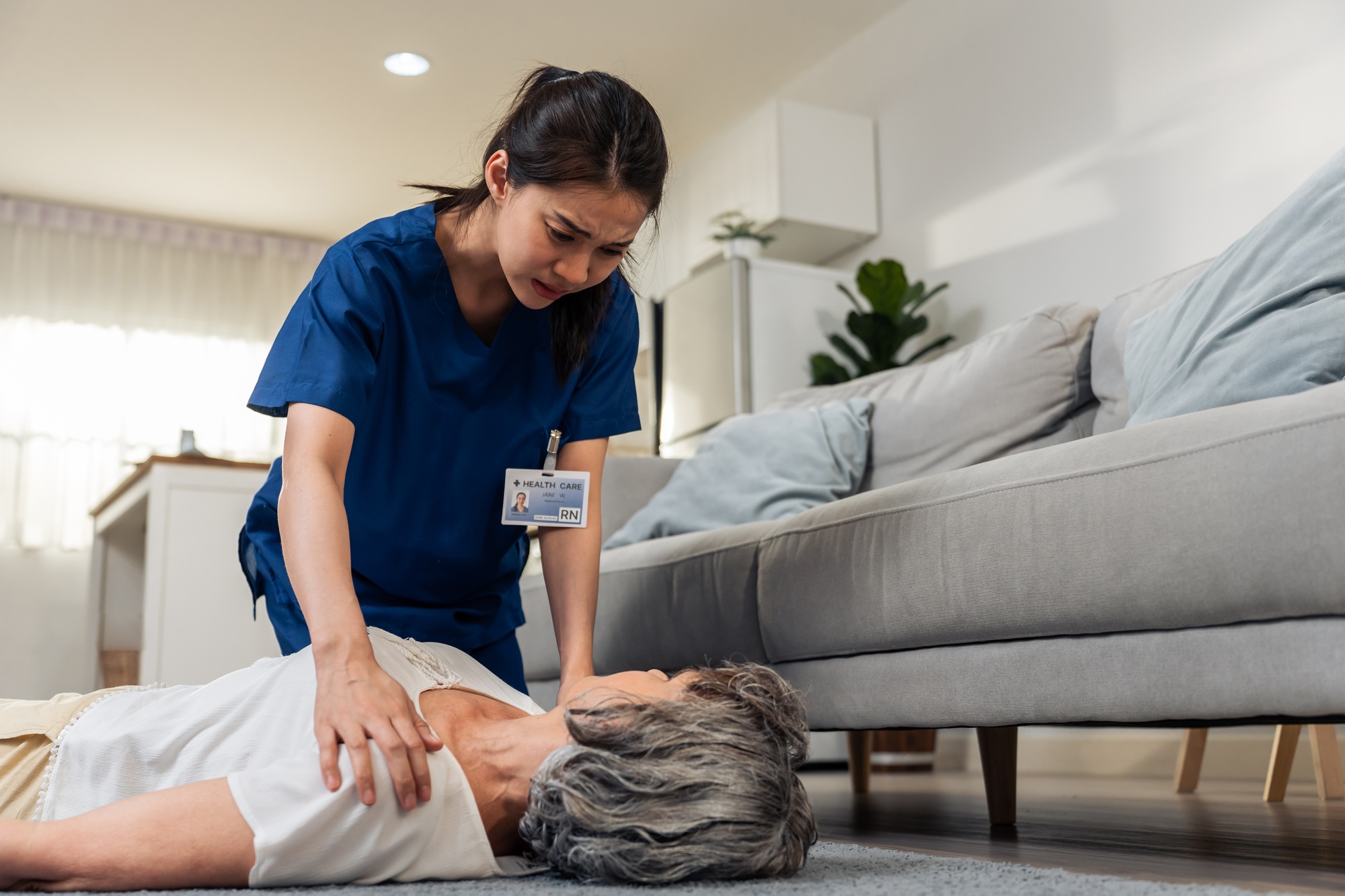
Speak to the person loudly and gently tap their shoulders to see if they respond. If they do not respond and are not breathing normally, a case of cardiac arrest should be suspected.
3. Call for Help and Get an AED
Contact emergency services immediately by calling 995, or ask someone nearby to do so.
If other people are around you, instruct someone to fetch the nearest AED.
In Singapore, over 10,00 AEDs can be found in public places such as offices, shopping malls, MRT stations, schools, and residential buildings. You can use the myResponder smartphone app to find the nearest AED based on your location.
4. Start Performing CPR
While waiting for the AED, begin performing chest compressions, also known as hands-only CPR. This will help maintain blood circulation to the casualty’s brain and vital organs until professional help arrives.
To perform hands-only CPR, push hard and fast in the centre of the casualty’s chest at a steady rhythm. Allow their chest to rise fully between compressions.
5. Turn On the AED and Attach the Electrode Pads
Once the AED arrives, switch it on immediately and listen to the voice instructions. The machine will tell you how and where to attach the electrode pads.
Before sticking the pads to the casualty’s chest, ensure that the skin there is bare, clean, and dry. Remove any jewellery or medicated patches they may be wearing.
6. Stand Clear During Heart Rhythm Analysis
The AED will carry out an analysis of the casualty’s heart rhythm. Everyone on the scene must avoid touching the casualty during this process.
This is because any physical interference from other people’s movements and heartbeats can cause errors in the AED’s reading. A misreading will result in the casualty not receiving the right treatment.
7. Deliver a Shock if Needed
If the AED recommends a shock, make sure everyone at the scene stands back before you proceed.
Say “stand clear” loudly, make sure nobody is touching the casualty, and press the shock button on the device.
8. Continue CPR
After the shock, continue performing CPR according to the AED’s voice instructions until paramedics arrive.
If no shock was advised in step 7, resume CPR and continue following the AED’s prompts until paramedics take over.
Proper technique and familiarity are important when carrying out CPR. Consider enrolling for a CPR course or first aid training with CPR and AED modules to help you respond confidently in a real emergency.
Learn to Use an AED with EFAR’s Certified First Aid Training Course in Singapore
It’s common for people to panic in emergencies because they are afraid of doing something wrong or making the situation worse.
However, hands-on first aid training can help you stay calm in a stressful situation by learning how to operate an AED and building basic first aid skills.
At Emergencies First Aid & Rescue (EFAR), we believe that first aid training should be accessible to all Singaporeans.
Our general first aid courses will equip you with the necessary skills to take action in emergencies, including:
- How to perform CPR accurately and calmly.
- How to operate an Automated External Defibrillator (AED) accurately.
- How to apply first aid for breathing emergencies.
- How to treat wounds, fractures, burns, and other injuries.
You can choose from our selection of first aid certifications with AED and CPR modules built in, depending on the type and scope of training you are interested in acquiring:
- Standard First Aid with CPR & AED Course for anyone interested in learning basic and essential first aid skills.
- Occupational First Aid with CPR & AED Course for anyone who has been assigned a first-aider role at the workplace or have been assigned a WSH-related role in the company.
- Child First Aid with CPR & AED Course for parents, caregivers, educators, or anyone interested in the specifics of first aid for children and infants.
- Basic Cardiac Life Support (BCLS) + AED Course for healthcare professionals, young parents keen on learning Infant and Children resuscitation or individuals who are interested in becoming a BCLS+AED Instructor.
- HeartSaver CPR+AED Course for those who want to learn basic first aid skills mainly on how to handle cases of cardiac arrest and choking in adults.
EFAR’s courses are certification-based and SFRAC-accredited, which means they are eligible for SSG funding and SkillsFuture Credit. This helps make it easier for you, your friends, relatives, and even colleagues to access affordable first aid training in Singapore.
Build the First Aid Skills That Could Save a Life
Cardiac arrest often happens without warning. Immediate intervention from ordinary Singaporeans who can confidently use an AED and apply basic first aid can greatly improve a casualty’s survival chances.
By attending a first aid and AED training course in Singapore today, you equip yourself with practical skills that could save a loved one, colleague, or perhaps even a stranger.
Ready to take the first step? Sign up for any of our available first aid and AED courses or learn more about how EFAR can help you get trained and prepared today.
Already a certified first aider? Don’t let your skills lapse! Sign up for our Standard First Aid + AED Refresher Course and stay prepared for any emergency.